Pages

Tuesday, July 29, 2014

The Teacher's Lounge: Fantasy Booking Plan C-Na

In yesterday’s Teacher’s Lounge, I tried to answer the question “Why do we hate John Cena?”  Today, I have a little fun playing booker and come up with a way that instantly makes John Cena more popular with the older WWE crowd, or at the very least, more interesting.

Summer Slam

John Cena and Brock Lesnar are in the middle of an epic battle for the WWE World Heavyweight Championship.  Triple H is, as usual, seated at ringside.  Paul Heyman stalks around outside, making faces that rival only William Regal and Vince McMahon for their storytelling ability.

As the match reaches its climax, we see Lesnar kick out of the Attitude Adjustment, while Cena barely manages to escape the F-5.  Michael Cole has let us know we have seen “the turning point” in the match 319 times, JBL continues to laud the skills of these athletes, while Lawler says this is the best match he’s ever seen over and over again.

Monday, July 28, 2014

The Teacher's Lounge: Why do we hate John Cena?

Why do we hate John Cena?

Why is it that the majority of adults who watch
professional wrestling groan every time they hear his music?  Why do we despise the jean shorts (Austin wore them), the multi-colored t-shirts with bumper sticker phrasing (The Rock was a slogan machine) and his incessant way of reminding us all exactly where he is?  (In case you had forgotten, the champ is here.)

Do we detest the man himself?  Hardly.  We admire his tenacity to accomplish what he has done in the world of wrestling and we applaud his dedication to charitable work.  Yet why are the WWE fans that frequent social media so rabidly against him?

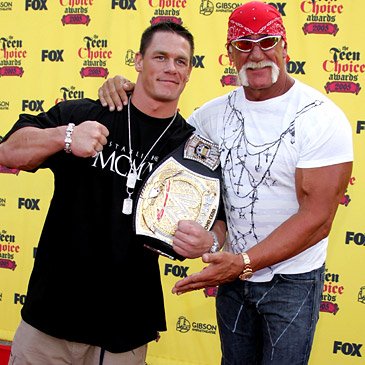
There is another wrestler who shared a similar fate as John Cena; idol of children, irritant to everyone else.  Like it or not, John Cena is this century’s Hulk Hogan, and by identifying the two biggest similarities between the two, we can discover why Cena finds himself in his current predicament.

1.  John Cena and Hulk Hogan have / had stale characters.

Saturday, July 26, 2014

The Teacher's Lounge: Why WWE should NOT #FreeRey

First off, before you begin penning the hate tweets, let me start off with a disclaimer.

I love Rey Mysterio.  

Pound for pound, he might be one of the best wrestlers in history and is almost guaranteed to be a WWE Hall of Famer.  When I first saw him wrestle in WCW in the mid-90’s, I was flabbergasted.  I had never before seen anyone treat the ring as his personal playground; Rey bounced, spun and flew through the air in ways I only had seen before in the movies.  His battles with Psychosis, Dean Malenko and Chris Jericho are what dreams are made of, and its possible no feud in the modern era lasted as long or resulted in such amazing feats in the ring as the one he had with Eddie Guerrero.

I cheered when he won the Royal Rumble, jumped to my feet in delight when they made him World Champion and, like everybody else, absolutely hated the Filthy Animals.

I love Rey Mysterio.  When I first heard that Rey had stopped cashing his paychecks and was considering legal action against WWE for renewing his deal, I immediately took Mysterio’s side.

Then, as Doc Manson always advises, I looked at the data.

Lessons from the Network: No Way Out 2003

Historical Context

When WWE acquired both ECW and WCW in the early 2000’s, they were flush with talent from all 3 of the major companies, though in some cases, “talent” is a word I use relatively loosely.  As time went on, the invasion angle faded away and only a handful of stars from Atlanta or Philadelphia remained, having been fully incorporated into WWE storylines.
No Way Out 2003 was the table-setter leading up to Wrestlemania XIX, famous for McMahon vs. Hogan and infamous for the botched shooting star press from Brock Lesnar.

Rather than give you the traditional 5 lessons today, we will instead focus on a single one from this era, using No Way Out 2003 as an example.

Lesson: The Post-Invasion WWE had the greatest collection of wrestling talent ever.


Friday, July 25, 2014

Class is in Session: Ambrose's Roadblock to Superstardom

Over the last twenty years, no single archetype has been more beloved in wrestling than the anti-hero.  Whether it be an individual (CM Punk or Stone Cold) or a group (the early nWo or DX), anti-heroes are the living embodiment of what the vast majority of wrestling fans would like to be, if it wasn’t for those pesky laws, rules and regulations keeping us in line.  While we desperately want to give our boss the finger, crotch-chop the rude barista at Starbucks or knee the idiot yelling into his cell phone right in the head, we know we can’t, so we live vicariously through the anti-hero.

Dean Ambrose is poised to be the next great anti-hero in wrestling; in fact, one could argue that he’s already there.  Over the last few weeks, Ambrose has gone to whatever lengths necessary to exact his revenge on Seth Rollins for betraying The Shield and joining The Authority.  He’s attacked him before a match, during a match and after a match. No amount of security is seemingly enough to stop Ambrose; kick him out of the building and he’ll find his way back in.  If not, he’ll lie in wait for you in the trunk of your car, a moment that will likely been one of the more memorable of 2014.

When you listen to Dean Ambrose speak, you are drawn in by his charisma.  You can feel the vitriolic hate emanating from his every pore.  You can see, as my partner Doc Manson so eloquently calls it, the Portrait of Malice.  But you don’t always understand or remember exactly what he said, which is a problem, one that can be solved with today's lesson.

Lesson:  The biggest superstars always have a catch-phrase fans can latch onto.


Thursday, July 24, 2014

Lessons from the Network: Degeneration X - In Your House

                                       Historical Context

When I began watching wrestling in the early 1990’s, there were four WWF Pay-Per-Views a year; Wrestlemania, SummerSlam, Survivor Series and Royal Rumble.  That’s it.  Now to some new wrestling fans that might seem insane.  To some, it might border on sacrilege.  To others, it might seem like a very good idea, considering the Battleground hate I’ve read on Twitter this last week, but I’ll save that for a separate column.

In 1993, Vince McMahon expanded by adding King of the Ring, the 5th “major”, as it were.  In the years that followed, whether it was in response to the growing popularity of the competition in WCW or just as an experiment to try to earn more money, Vince added “In Your House”.  Originally designed as a shorter, cheaper PPV, the In Your House series would be the ‘minor’ spectacles to fill the monthly gaps                                                             between larger events.

For our next Lessons from the Network, we take a trip to the IYH event from December of 1997.  WCW has taken over the lead in the Monday Night Wars, and at this point, WWE is on the ropes.  This is also the first PPV after Survivor Series ‘97, also known as the Montreal Screwjob.  On the cusp of the Attitude Era, we now sit under the learning tree known as Degeneration X: In Your House.


Lesson 1:  Proper planning prevents poor performance.

The Mad Scientist: Ranting about Bo Dallas

Contrary to the opinion of my fellow number 2 contender, The Teacher, I don’t like Bo Dallas.

I don’t like Bo Dallas, and not in the way that I’m supposed to not like Bo Dallas.

I get it, I get the gimmick; Bo Dallas is the antithesis of what wrestling fans like. The attention to detail is there, from the smarmy look, the too-toothy grin, the constant state of wet – everything on this guy is hosed down before he heads to the ring, from hair to shirt. Someone probably should have told Bo that being constantly wet was the Shield’s gimmick, but with that group disbanded I guess the theft is acceptable.